Gutter cleaning in Apex, NC
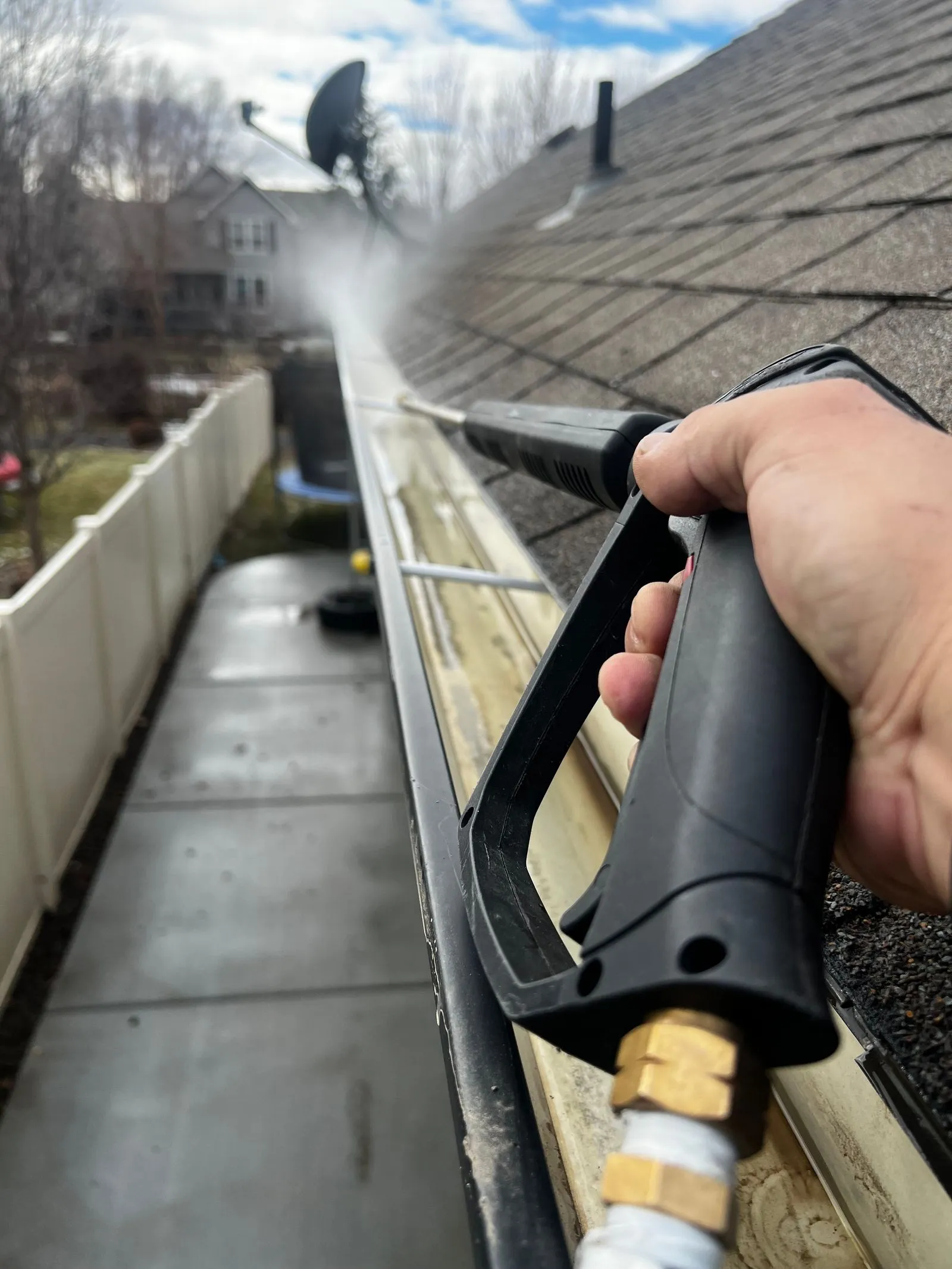
Gutters cleared out by hand, downspouts flushed until they run clear, and loose sections re-secured before the next storm.
- Pine needles, oak tassels and pollen sludge removed
- Downspouts flushed and unblocked
- Sagging gutters re-hung and re-pitched
- Loose spikes swapped for hidden hangers
- Debris bagged and taken away
Covering Apex · Cary · Morrisville · Durham
Book gutter cleaning
Done right the first time
The job gets sized up properly, the right materials get used, and it holds up after we leave.
Experienced handymen
Work goes to people who do that trade every week — not whoever happens to be free.
Honest work and pricing
Describe the job on the phone and get a realistic number before anyone comes out.
Why choose us
Your trusted home repair partner
We make home maintenance simple and reliable. Whether it is a quick fix or a bigger project, one call gets it handled.
- Trusted expertise
- Customer-first approach
- Reliable service
- Fair, upfront pricing
- Safety and care
- Local and friendly
Why this is a bigger deal in the Triangle than elsewhere
Two things make gutters here a recurring job rather than an occasional one.
The first is loblolly pine. It drops needles year-round rather than in one seasonal burst, and pine needles behave differently to leaves: they do not decay quickly, they knit together into a dense mat, and they pack into a downspout elbow in a way leaves rarely do. A gutter can look reasonably clear from the ground and still be running at a fraction of its capacity because the outlet is plugged.
The second is the pollen. For a few weeks in spring, everything in this area is coated in a yellow-green film, and the oaks drop tassels at the same time. That mix rains into the gutters and, once it is wet, turns into a sludge that sets like a soft mortar in the bottom of the trough. It is the single dirtiest gutter job of the year and it is the one people most often skip, because it happens before the leaves fall and does not look like the traditional fall chore.
What overflowing gutters actually cost
Nobody calls about gutters because they enjoy the topic. They call because something else went wrong, and the gutter was the cause.
Water spilling over the front edge lands against the wall and keeps the siding, trim and window heads below it damp, which is the number one cause of the rot that shows up in this climate. Water spilling over the back edge, between the gutter and the fascia, goes straight into the fascia board and the roof edge and rots the very thing the gutter is hanging on.
At ground level, overflow concentrates water at the foundation instead of carrying it away. In Piedmont clay that is worse than it sounds, because clay does not drain — water sits against the foundation, saturates the crawlspace, and cycles the soil through swelling and shrinking right where the footings are. Damp crawlspaces, musty smells, and the sticking doors that come with seasonal movement often trace back to a downspout dumping beside the house.
The parts of the job beyond scooping
Clearing the trough is only half of it. Every downspout gets flushed and watched until it runs clear, because a clean gutter feeding a blocked downspout still overflows. Blockages tend to sit in the upper elbow or where an upper roof’s downspout discharges into a lower gutter.
Pitch gets checked at the same time. A gutter should fall gently toward its outlet, and sections that have sagged in the middle hold standing water, which is heavy, breeds mosquitoes, and accelerates corrosion at the seams. Re-hanging a sagging run to a proper fall solves it.
Where the water goes once it leaves the downspout matters as much as the gutter itself. A downspout ending in a splash block six inches from the wall is not doing its job — an extension carrying it four to six feet out, or into a buried line, is a cheap change with a real effect on the crawlspace.
Getting it looked at with everything else outside
Gutter work puts someone on a ladder at roof level all the way around the house, which is the best chance to spot problems early — soft fascia, a lifted shingle at a valley, failed caulk at a corner board, or a loose section of siding. Rot found this way is covered under siding and wood rot repair. Overflow running down beside a deck is a frequent cause of the damage covered under deck and fence repair, and gutters that are pulling loose show up regularly on a home inspection punch list.
Gutter cleaning — common questions
How often do gutters need doing around here?
Twice a year is the realistic answer for most houses in this area, and the timing matters more than the count. Once in late spring after the pine pollen and the oak tassels have finished dropping, and once in late fall or early winter once the leaves are down. A house under mature pines can need a third visit.
Do gutter guards actually work?
They help with leaves and they struggle with pine needles, which is the wrong way round for this part of the Triangle. Needles are narrow enough to sit on a mesh and mat together, and shingle grit and pollen bind them into a felt. Guards reduce how often gutters need clearing here — they do not eliminate it, and the ones that need removing to clean can make the job harder.
My gutter is pulling away from the house. Can that be fixed?
Usually yes. Older gutters were fixed with long spikes through a ferrule, and those work loose as the fascia takes on and gives up moisture. Swapping to hidden hangers screwed into the rafter tails is a permanent fix. If the fascia behind it has gone soft, that board gets replaced first — hanging new hardware on rotted wood achieves nothing.
Do you go on the roof?
Gutters are cleared from a ladder, which is safer and does no damage to the shingles. If something clearly needs attention on the roof itself, you will hear about it, but that work goes to a roofer.
Often booked with this